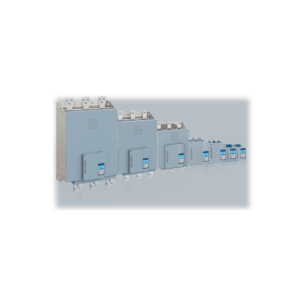
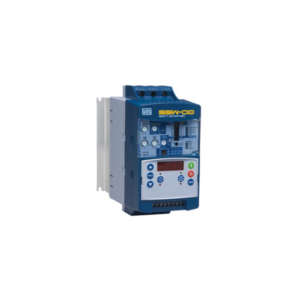
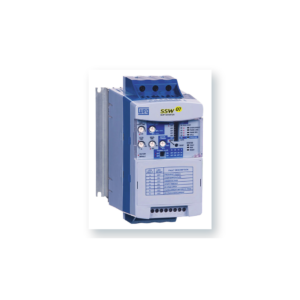
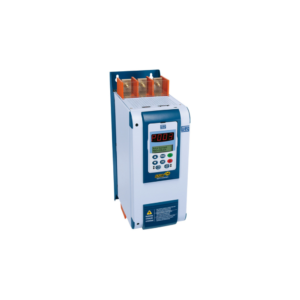
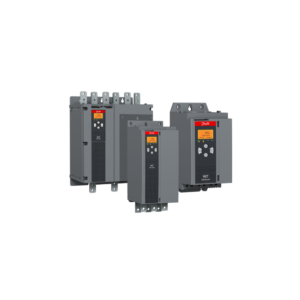
Advanced Machine Performance
ATV340 is engineered for high-dynamic applications requiring rapid command processing, accurate torque and speed response, and repeatable machine cycles. Schneider Electric documents an optimized speed bandwidth up to 400 Hz, a 1 ms application task cycle and up to 220% nominal torque for 2 seconds under specified conditions.
The Adaptive Cascade Vector Control method is designed to improve torque accuracy, low-speed behavior and robustness across different motors and applications. Final tuning must consider the motor nameplate, inertia, mechanical transmission, encoder configuration, switching frequency, acceleration and deceleration limits.
ATV340 Applications and Machine Functions
Altivar Machine ATV340 is suitable for packaging machinery, conveyors, material handling, cranes and hoists, textiles, material working, mechanical actuators, industrial pumping and other OEM systems. Application functions include master/slave arrangements, brake control, positioning-related functions, torque limitation, load sharing, fast I/O and feedback-based speed control.
For hoisting or vertical loads, the machine builder must validate the mechanical brake, load path, overspeed protection, regenerative energy, emergency stopping and complete safety category. For pumps, minimum speed, process control, motor cooling and dry-run or pressure protection must be addressed separately.
Functional Safety for ATV340 Machines
All ATV340 drives include dual-input Safe Torque Off designed for SIL3 / PL e capability when implemented in a validated architecture. Optional Safety Module Advanced adds functions such as Safe Stop 1, Safely Limited Speed, Safe Maximum Speed and Guard Door Locking. PROFIsafe and CIP Safety modules are available for compatible networked safety architectures.
Safety functions do not replace machine risk assessment, lockout/tagout, safe isolation, guarding, emergency-stop design or validation by competent personnel. The final safety performance depends on the complete architecture, wiring, diagnostics, configuration and proof testing.
ATV340 Ratings and Product Selection
The Ethernet range includes heavy-duty references from 0.75 to 75 kW and normal-duty selections up to 90 kW. Selection must use motor nameplate current and required overload—not kW alone. The supply network, continuous output current, transient current, losses, switching frequency, enclosure temperature and expected cycle must all be checked