
Low Voltage Circuit Breakers

High Reliability

Flexible Integration

Expert Support

High Reliability

Flexible Integration

Expert Support
Low Voltage Circuit Breakers
Low voltage circuit breakers interrupt a circuit under specified fault conditions and provide the protection functions defined by their design. Selection considers the supply voltage, load current, available short-circuit current and coordination with other protective devices. A matching ampere rating alone does not confirm a suitable breaker.
Typical Applications

Control panel incomers and outgoing circuits.

Building and industrial Distribution

Motor Feeder Protection

Replacement and Upgrade of existing panel
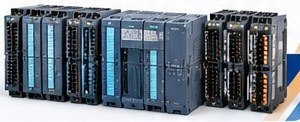
MCB MCCB ACB and Related Protection Devices
⚙ Technical Selection Checklist
| Selection Item | Information to Confirm |
|---|---|
| Supply System | AC or DC, operational voltage, frequency and earthing arrangement |
| Load and Conductors | Design current, cable capacity, load type and ambient conditions |
| Fault Rating | Prospective short-circuit current and applicable Icn, Icu and Ics ratings |
| Poles and Mounting | Number of poles, neutral treatment and panel dimensions |
| Trip Characteristics | Curve or trip unit functions, adjustable settings and coordination |
| Residual Current | RCCB or RCBO function, waveform type and sensitivity |
| Accessories | Auxiliary contacts, shunt trip, undervoltage release and control voltage |
Rated Current and Breaking Capacity
Rated current in amperes and breaking capacity in kiloamperes describe different duties.
Trip Settings and Protection Coordination
A fixed trip curve or adjustable trip unit must suit the load and conductors. Starting currents, earth fault requirements and upstream devices affect selection.
AC, DC and Residual Current
Match the declared DC rating, pole arrangement, polarity and connections to the circuit.
Breaker Replacement and Panel Verification
A replacement review should check terminal fit, busbar interfaces, clearances, enclosure condition, heat dissipation and available fault current. Agreed testing can include mechanical operation, accessory functions and trip unit settings. Any injection or functional trip testing should be specified in the scope. Record the selected device and settings in the updated drawings and maintenance information.
Frequently Asked Questions
Can a breaker with the same ampere rating be substituted?
Only after checking voltage, breaking capacity, trip function, poles, mechanical fit and coordination. Devices with the same rated current can have materially different protection characteristics.
Can an AC circuit breaker be used on DC?
Will a motor feeder breaker provide every motor protection function?
Request a Circuit Breaker Quotation
Send the details below with your enquiry. If some information is unavailable, include existing drawings and clear photographs so the outstanding points can be identified.
Related Automation and Control Products
Industrial DC Power Supplies for 12 V and 24 V Systems | Industrial PLCs and IO Modules | Industrial Sensors and Actuators | Motor Control Centers